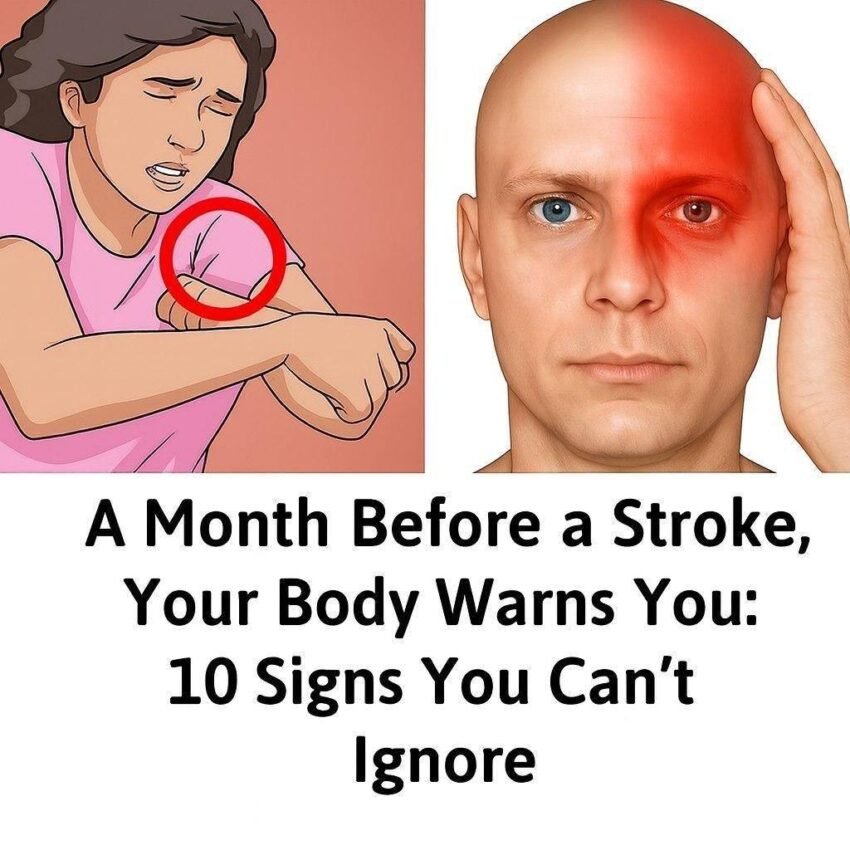
Medically speaking: There is no verified checklist of 10 specific warning signs that appear exactly one month before a stroke.
That said — some research does suggest that certain subtle symptoms can occur in the days or weeks before a stroke, especially in women and older adults. But these are not “one month to the day” warnings, and they are not the same as the sudden, dramatic symptoms of a TIA or major stroke.
What you are likely seeing online is a mix of:
-
Real TIA (transient ischemic attack) facts — but TIA symptoms are sudden and brief, not lingering for weeks
-
Real prodromal symptoms (early warning signs) reported in some studies — but these are non-specific and easy to miss
-
And some overhyped clickbait that turns legitimate medical observations into a rigid “10 signs, 30 days before” checklist
🧠 What the Science Actually Says
A 2020 study in the Journal of the American Heart Association looked at prodromal symptoms in people who had a stroke.
About 43% of stroke patients reported having at least one symptom in the week before their stroke — not a full month.
The most commonly reported early symptoms were:
-
Headache – unusual or severe
-
Fatigue – unexplained, heavy tiredness
-
Sleep disturbances – trouble sleeping or excessive sleep
-
Dizziness or unsteadiness
-
Nausea or vomiting
-
Confusion or trouble concentrating
-
Mood changes – anxiety, depression, irritability
-
Weakness – usually mild, not full paralysis
-
Numbness or tingling – often on one side
-
Speech difficulties – mild slurring or word-finding trouble
⚠️ Critical Caveats
-
These symptoms are vague. They overlap with stress, poor sleep, dehydration, migraines, anxiety, and many other things.
-
They are not reliable enough to predict a stroke on their own.
-
They do not replace FAST signs.
If someone has sudden:-
Face drooping
-
Arm weakness
-
Speech difficulty
-
Time to call 911
That is an emergency — even if symptoms go away.
-
🩺 What This Means for You
If you or someone you know experiences any new, unexplained neurological symptom — even if it comes and goes — see a doctor.
But do not wait for a “1-month warning list.” A TIA can happen with zero warning, and the risk of a major stroke is highest in the 48 hours after a TIA.
✅ Summary
| Claim | Truth |
|---|---|
| “10 specific signs 30 days before” | Not medically validated |
| Some people have early symptoms days before | Yes — but subtle and inconsistent |
| TIA is a sudden, brief warning stroke | Yes — treat as an emergency |
| Early symptoms alone predict stroke | No — too vague |
Bottom line:
Listen to your body. Don’t ignore unusual headaches, fatigue, dizziness, or “off” feelings — especially if you have stroke risk factors.
But don’t rely on a blog checklist to time a stroke. Fast action saves brain.